
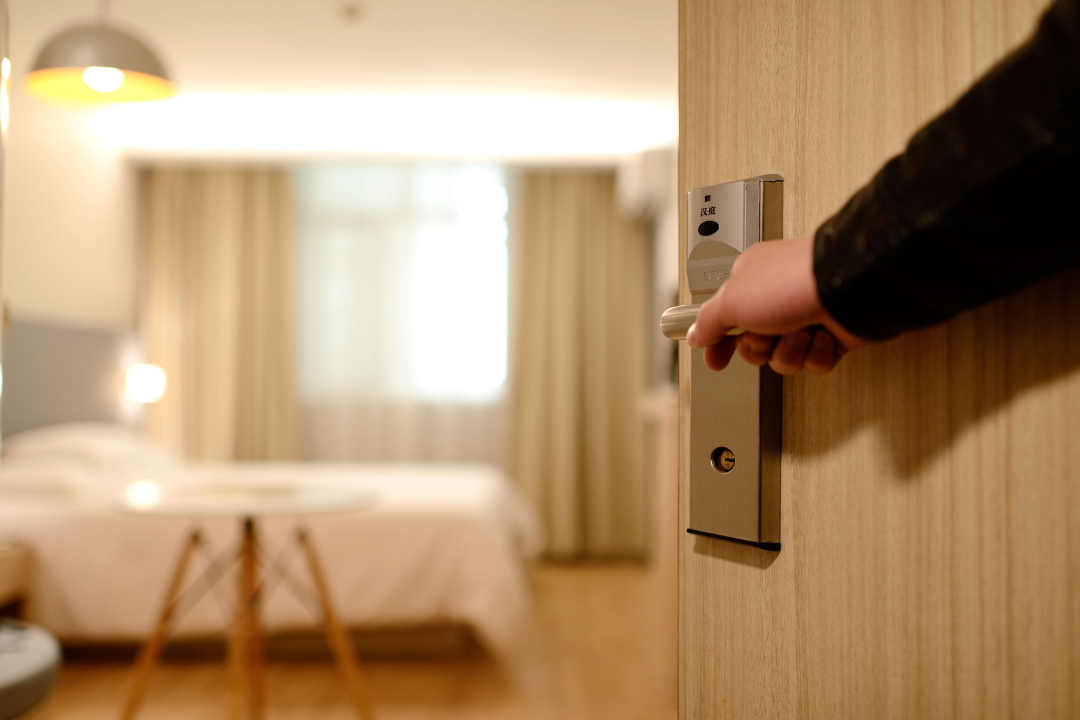
A guest walks into a hotel room after a long flight. The air conditioning is already at the right temperature. The curtains are open just enough. The TV greets them with a welcome screen instead of a blank one. None of that happens by chance: a Guest Room Management System (GRMS) is working quietly in the background.
For Dubai hotels competing on guest experience as much as on rate, a GRMS has moved from a nice-to-have to close to a baseline expectation. Most guides to it stop at lighting, climate, and locks. The entertainment layer usually gets a passing mention, a TV on the wall, when it's actually what decides whether a room feels premium or just automated.
What a GRMS Actually Controls
A GRMS connects a room's core functions into one system, instead of separate switches, remotes, and panels working alone. A typical installation brings together:
-
Lighting scenes for arrival, relaxing, and sleep
-
HVAC and climate control
-
Motorised curtains and blinds
-
In-room entertainment: TV, streaming, audio
-
Smart locks and access control
-
Guest service requests: Do Not Disturb, Make-Up Room, housekeeping
The room responds to occupancy, time of day, and the guest's own preferences, instead of the guest hunting for the right switch.
Why Hotels Are Investing in GRMS Now
Two things are driving it. The first is energy cost. A room sits unoccupied for a large part of the day, yet without automation it keeps drawing power for HVAC, lighting, and standby devices. Green building certification programmes, IFC's EDGE standard among them, have repeatedly shown that occupancy-based automation, HVAC setback, lights off, blinds closed once a room empties, cuts guestroom energy use meaningfully. Across a full property, over a full year, that adds up.
The second is guest expectation. Someone with a smart thermostat and a voice assistant at home notices immediately when a hotel room needs them to hunt for a light switch or call the front desk just to adjust the air conditioning.
Where the Entertainment Layer Actually Matters
Most write-ups on this treat lighting, HVAC, and locks as the whole story. Entertainment gets mentioned as an afterthought, if at all. That's a missed opportunity, and usually the difference between a room that feels automated and one that feels genuinely premium.
Entertainment belongs in the same arrival scene as lighting and climate. The TV should already be on a welcome screen. Audio should stay silent until the guest wants it. Switching from a personal streaming account to hotel content should take one tap, not a remote-control hunt. Done properly, the AV system shares the same occupancy and scene data as lighting and HVAC, so a single "Goodnight" command dims the lights, lowers the blinds, and puts the TV to sleep, instead of three separate systems doing three separate things.
This is also where guest privacy meets system design: personal streaming credentials need to clear automatically at checkout, the same way a smart lock's access code does.
What It Means for Hotel Operations
A GRMS gives staff a live view of every room: occupied, vacant, in cleaning, or flagged Do Not Disturb, without a physical walkthrough. That data can trigger housekeeping based on actual checkout rather than a fixed schedule, flag an HVAC fault before it becomes a guest complaint, and cut the number of routine calls reaching the front desk.
Choosing a GRMS Partner in Dubai
The underlying protocol, KNX, BACnet, or a manufacturer's proprietary system, matters less than whether the company installing it can coordinate lighting, HVAC, access control, and AV as one system, rather than four separate vendors pointing fingers when something doesn't sync. That's the same principle behind how we approach hospitality AV more broadly: one team coordinating the whole guestroom, not four.
A GRMS isn't install-and-forget, either. Firmware needs updating, sensors drift out of calibration, and integrations with the property's PMS need retesting after any software update on either side. A support plan catches this before it shows up as a guest complaint.
Bring Your Guest Rooms Up to Standard
If your property's rooms are running on disconnected switches, remotes, and panels, the earliest conversation is usually the most useful one. A guest calling the front desk to adjust the air conditioning, or hunting for a remote just to change the TV input, is experiencing exactly the gap a GRMS is built to close.
MKB Bespoke Audio designs and installs GRMS for hotels across the UAE, coordinating lighting, HVAC, access control, and in-room entertainment as one system, standardised across every room so guest experience doesn't vary floor to floor, with support in place long after handover.
Frequently Asked Questions
What does a GRMS actually control in a hotel room?
Typically lighting, HVAC, curtains and blinds, in-room entertainment, access control, and guest service requests like Do Not Disturb and Make-Up Room, all from one coordinated system rather than separate switches and remotes.
Does installing a GRMS mean replacing everything in the room?
Not necessarily. Most installations integrate with existing locks, PMS software, and HVAC equipment through standard protocols rather than ripping out infrastructure that already works.
How much energy can a GRMS realistically save?
Occupancy-based automation, HVAC setback and lighting shutoff when a room is empty, is the biggest single driver, and green building certification programmes have documented meaningful guestroom energy reductions from this alone.
Which company installs guest room management systems in Dubai?
MKB Bespoke Audio designs and installs GRMS for hotels across the UAE, coordinating lighting, HVAC, access control, and in-room entertainment as one system rather than separate vendor installations.


