
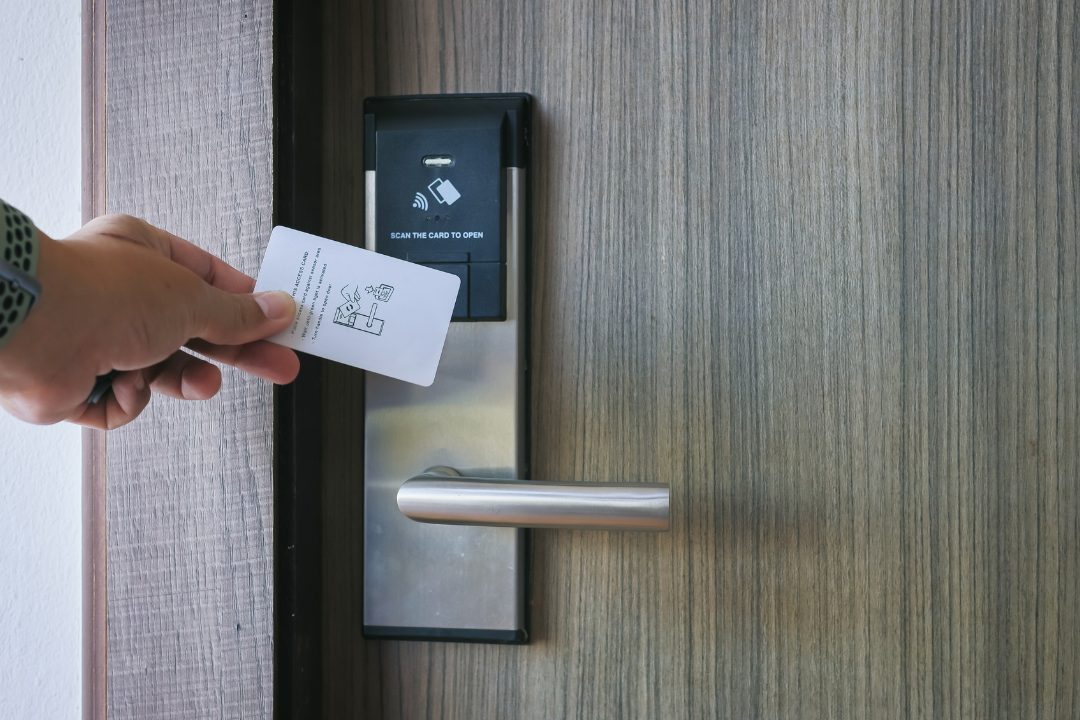
Ask ten hotel guests what makes a hotel "smart" and most will describe a gadget: a voice assistant, a tablet by the bed, a robot in the lobby. None of that is actually what makes a hotel smart. What makes it smart is whether those systems talk to each other, or whether they're just a collection of expensive add-ons operating in isolation.
That distinction matters more than the technology itself, and it's usually where hotels get it wrong.
What "Smart" Actually Means
A smart hotel isn't a hotel with some smart devices in it. Most hotels already have some: a smart thermostat here, a keyless lock there, maybe a tablet at reception. The problem is that these tend to arrive as separate purchases, bought by different departments at different times, and none of them share data with each other.
A genuinely smart hotel runs on three layers working together: a network strong enough to carry all of it, systems that are integrated rather than isolated, and control that's simple for both the guest and the staff running it. Remove any one of the three and what's left is a hotel with expensive gadgets, not a smart hotel.
The Network Layer Nobody Sees
None of the guest-facing technology works without a wired, properly designed network underneath it. Guest room automation, in-room entertainment, staff communication, and back-of-house systems all compete for the same bandwidth, and a network designed for basic Wi-Fi doesn't hold up once every room is also running lighting, climate, and access control on top of it.
This is the layer that gets skipped most often, because it's invisible once it's working, and expensive to fix once it isn't.
Guest Room Automation
Guest room systems, lighting, HVAC, blinds, entertainment, and access control running as one system rather than separate remotes and switches, are the part of a smart hotel guests actually interact with directly. It's a large enough topic to deserve its own treatment, the short version is that the same "integrated, not isolated" rule applies at the room level too.
Common Areas and Back of House
The rooms usually get the attention, but a smart hotel extends to spaces guests never see. Lobbies and restaurants need zoned audio and lighting control, not one system controlling the whole ground floor at once. Event spaces need AV that can be reconfigured for a wedding one day and a conference the next. Back of house, engineering and housekeeping need real-time visibility into room status, energy use, and maintenance needs, not a manual walkthrough every few hours.
Hotel Technology Next Generation (HTNG), the industry body that sets interoperability standards for hospitality systems, has pushed for exactly this kind of cross-system communication for years, precisely because so many hotels still buy technology in silos.
Why This Matters More in a Market Like Dubai
Dubai hotels compete on guest experience in a market where guests have stayed at properties across the world and know what good technology feels like. A disconnected system shows up fast: a voice assistant that doesn't control the blinds, an app that manages the lock but not the lighting. In a competitive market, that gap is noticeable, and it's the kind of detail that shapes a review.
Getting There Without Starting Over
Becoming a smart hotel doesn't mean ripping out existing infrastructure. Most integration work uses standard protocols, KNX, BACnet, or manufacturer APIs, to connect systems that already exist rather than replacing them. The starting point is usually an audit: what's already installed, what it can talk to, and where the real gaps are, before any new equipment gets specified.
Build It as One System
If your property has technology that doesn't talk to itself, room by room or system by system, the earliest conversation is usually the most useful one. A voice assistant that doesn't control the blinds, a lock system with no link to housekeeping, an event space that takes hours to reconfigure, these are the kind of gaps that show up in daily operations long before they show up in a review, and none of them require starting over to fix.
MKB Bespoke Audio audits what's already installed, works out what it can and can't talk to, and integrates guest rooms, common areas, and back-of-house systems as one coordinated platform across the UAE, using standard protocols rather than forcing a full replacement.
Frequently Asked Questions
What's the actual difference between a smart hotel and a hotel that just has smart devices?
Integration. A hotel with a voice assistant, a keyless lock, and a smart thermostat that don't share data is still running disconnected systems. A smart hotel has those same components working from shared occupancy and control data, so one action, arrival, checkout, do not disturb, updates everything at once.
Does becoming a smart hotel mean replacing existing infrastructure?
Not usually. Most integration happens through standard protocols that connect to equipment already installed, rather than requiring a full replacement. An audit of the existing systems is normally the first step.
Does this apply to smaller or heritage properties, or only large chains?
It scales down. A boutique property or a heritage building with real constraints on wiring and structure can still integrate the systems it has; the approach is just more tailored to the building than a standard rollout across identical rooms.
Which company builds smart hotel systems in Dubai?
MKB Bespoke Audio designs and integrates smart hotel systems across the UAE, covering guest rooms, common areas, and back-of-house automation as one coordinated system rather than a collection of separate installations.


